
Fortell venner om denne varen:
Utopia Thomas More


Finnes også som:
- Pocketbok (2012) NOK 119
-
PocketbokReissue edition(2003) NOK 119
- Pocketbok (2014) NOK 129
- Pocketbok (2016) NOK 129
- Pocketbok (2010) NOK 129
- Pocketbok (2011) NOK 139
- Pocketbok (2017) NOK 139
- Pocketbok (2017) NOK 139
- Pocketbok (2017) NOK 139
- Pocketbok (2016) NOK 149
- Pocketbok (2020) NOK 149
- Pocketbok (2018) NOK 149
- Pocketbok (2010) NOK 149
- Pocketbok (2016) NOK 149
-
Innbunden bok2. utgave(2017) NOK 149
- Pocketbok (2012) NOK 149
- Innbunden bok (1992) NOK 149
- Pocketbok (2021) NOK 149
- Pocketbok (2005) NOK 149
- Pocketbok (2014) NOK 159
- Pocketbok (2012) NOK 159
- Pocketbok (2018) NOK 159
- Pocketbok (2015) NOK 159
-
Pocketbok2 Revised edition(2018) NOK 159
- Pocketbok (2013) NOK 159
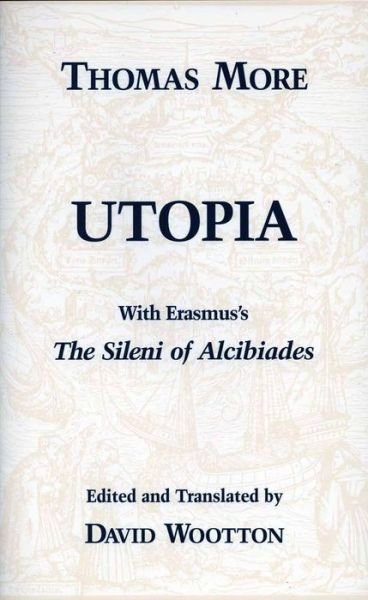
Utopia
Thomas More
What we can learn from a Renaissance nowhere
In 1516, a book was published in Latin with the enigmatic Greek-derived word as its title. Utopia--which could mean either "good-place" or "no-place"--gives a traveler's account of a newly discovered island somewhere in the New World where the inhabitants enjoy a social order based purely on natural reason and justice. As the traveler describes the harmony, prosperity, and equality found there, a dramatic contrast is drawn between the ideal community he portrays and the poverty, crime, and often frightening political conditions of 16th century Europe. Written by Sir Thomas More (1477-1535)--then a rising intellectual star of the Renaissance and ultimately the advisor and friend of Henry VIII who was executed for his devoutly Catholic opposition to the king--Utopia is as complex as its author.
In the form of a Platonic dialogue, Utopia explores topics such as money, property, crime, education, religious tolerance, euthanasia, and feminism. Claimed as a paean to communism (Lenin had More's name inscribed on a statue in Moscow) as often as it has been seen as a defense of traditional medieval values, Utopia began the lineage of utopian thinkers who use storytelling to explore new possibilities for human society--and remains as relevant today as when it was written in Antwerp 500 years ago. Explore the issues like feminism, euthanasia, and equality through Renaissance eyes Early communist tract or a defense of medieval values? You decide. Peer inside the enigmatic mind of the man who dared stand up to Henry VIII Appreciate the postmodern possibilities of Platonic dialogue
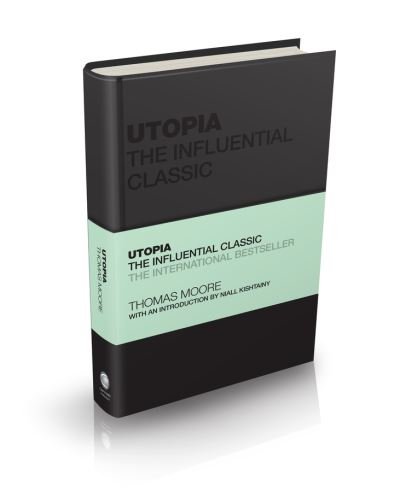
Part of the bestselling Capstone Classics series edited by Tom Butler-Bowdon, this edition features an introduction from writer, economist, and historian Niall Kishtainy.
| Media | Bøker Pocketbok (Bok med mykt omslag og limt rygg) |
| Utgitt | 1. oktober 2020 |
| ISBN13 | 9787100189460 |
| Utgivere | Shang Wu Yin Shu Guan |
| Mål | 150 × 220 × 10 mm · 317 g |
| Språk | Kinesisk |
Mer med Thomas More
Vis alle






![Cover for Thomas More · L'utopie De Thomas Morus, Traduction Nouvelle, (Ed.1842) (French Edition) (Pocketbok) [French edition] (2018)](https://imusic.b-cdn.net/images/item/original/570/9782012584570.jpg?thomas-more-2018-l-utopie-de-thomas-morus-traduction-nouvelle-ed-1842-french-edition-pocketbok&class=scaled&v=1408627770)


![Cover for Thomas More · La Description De L'isle D'utopie, O Est Comprins Le Miroer Des Republicques Du Monde. (Ed.1550) (French Edition) (Pocketbok) [French edition] (2018)](https://imusic.b-cdn.net/images/item/original/851/9782012559851.jpg?thomas-more-2018-la-description-de-l-isle-d-utopie-o-est-comprins-le-miroer-des-republicques-du-monde-ed-1550-french-edition-pocketbok&class=scaled&v=1408581964)
![Cover for Thomas More · Voyage a L'ile D'utopie (Ed.1888) (French Edition) (Pocketbok) [French edition] (2018)](https://imusic.b-cdn.net/images/item/original/793/9782012631793.jpg?thomas-more-2018-voyage-a-l-ile-d-utopie-ed-1888-french-edition-pocketbok&class=scaled&v=1409667880)




![Cover for Thomas More · More: Utopia - Cambridge Texts in the History of Political Thought (Pocketbok) [3 Revised edition] (2016)](https://imusic.b-cdn.net/images/item/original/730/9781107568730.jpg?thomas-more-2016-more-utopia-cambridge-texts-in-the-history-of-political-thought-pocketbok&class=scaled&v=1497891172)







![Cover for Thomas More · Vtopia (Open Source Classics) (English and Latin Edition) (Pocketbok) [English And Latin, 1.0 edition] (2013)](https://imusic.b-cdn.net/images/item/original/029/9781937847029.jpg?thomas-more-2013-vtopia-open-source-classics-english-and-latin-edition-pocketbok&class=scaled&v=1410253393)

![Cover for Thomas More · L'utopie (Pocketbok) [French edition] (2013)](https://imusic.b-cdn.net/images/item/original/071/9782930718071.jpg?thomas-more-2013-l-utopie-pocketbok&class=scaled&v=1407774003)
![Cover for Thomas More · Utopia: A Norton Critical Edition - Norton Critical Editions (Pocketbok) [Third edition] (2010)](https://imusic.b-cdn.net/images/item/original/461/9780393932461.jpg?thomas-more-2010-utopia-a-norton-critical-edition-norton-critical-editions-pocketbok&class=scaled&v=1421147583)

Flere i samme serie
![Cover for Thomas More · Utopia (Penguin Classics) (Pocketbok) [Reissue edition] (2003)](https://imusic.b-cdn.net/images/item/original/105/9780140449105.jpg?thomas-more-2003-utopia-penguin-classics-pocketbok&class=scaled&v=1409760897)
![Cover for Thomas More · Utopia - Penguin Great Ideas (Pocketbok) [1. utgave] (2009)](https://imusic.b-cdn.net/images/item/original/692/9780141043692.jpg?thomas-more-2009-utopia-penguin-great-ideas-pocketbok&class=scaled&v=1399152779)






![Cover for Thomas More · Utopia (Royal Collector's Edition) (Case Laminate Hardcover with Jacket) (Innbunden bok) [Royal Collector's edition] (2021)](https://imusic.b-cdn.net/images/item/original/953/9781774761953.jpg?thomas-more-2021-utopia-royal-collector-s-edition-case-laminate-hardcover-with-jacket-innbunden-bok&class=scaled&v=1628501751)
![Cover for Thomas More · Utopia - Classics of World Literature (Pocketbok) [New edition] (1997)](https://imusic.b-cdn.net/images/item/original/740/9781853264740.jpg?thomas-more-1997-utopia-classics-of-world-literature-pocketbok&class=scaled&v=1421147591)

Se alt med Thomas More ( f.eks. Pocketbok , Innbunden bok , Bok , CD og Innbunden bok )