Fortell venner om denne varen:
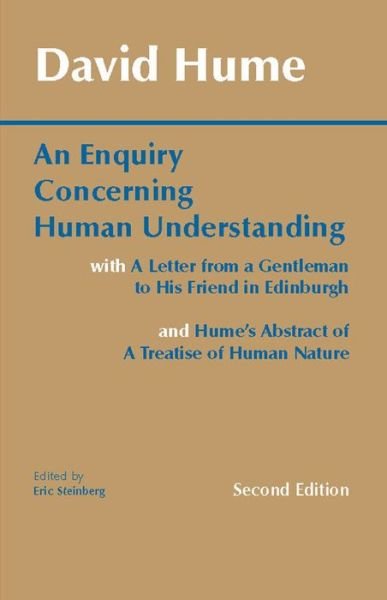
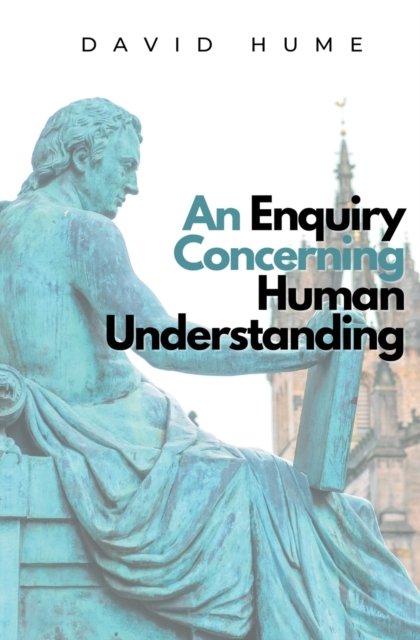
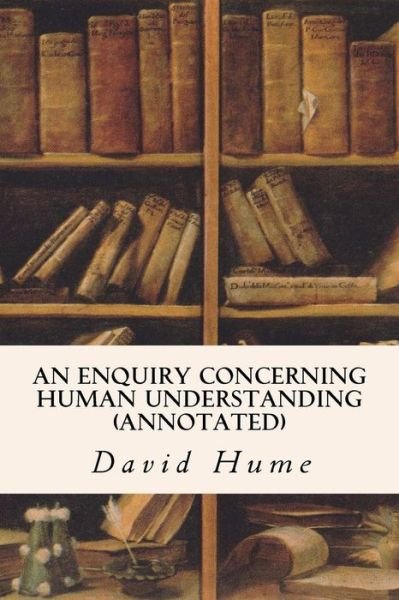
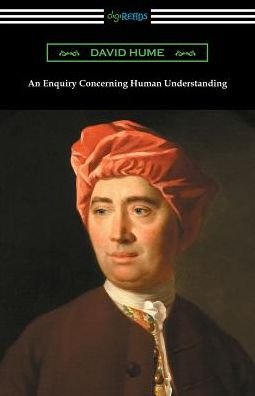
An Enquiry Concerning Human Understanding David Hume
 Julegaver kan byttes frem til 31. januar



Finnes også som:
- Pocketbok (2018) NOK 129
- Pocketbok (2018) NOK 129
- Pocketbok (2015) NOK 139
- Pocketbok (2011) NOK 139
- Pocketbok (2014) NOK 139
- Pocketbok (2017) NOK 139
- Pocketbok (2015) NOK 139
- Pocketbok (2011) NOK 139
- Pocketbok (2015) NOK 149
- Pocketbok (2015) NOK 149
- Pocketbok (2016) NOK 159
- Pocketbok (2018) NOK 159
- Pocketbok (2021) NOK 159
- Pocketbok (2017) NOK 159
- Pocketbok (2013) NOK 159
- Pocketbok (2016) NOK 159
- Pocketbok (2014) NOK 159
- Pocketbok (2017) NOK 169
- Pocketbok (2009) NOK 169
- Pocketbok (2019) NOK 179
- Pocketbok (1988) NOK 179
- Pocketbok (2017) NOK 189
- Pocketbok (2021) NOK 189
- Pocketbok (2011) NOK 199
- Pocketbok (2016) NOK 199
An Enquiry Concerning Human Understanding
David Hume
Publisher Marketing: David Hume (7 May 1711- 25 August 1776) was a Scottish philosopher, historian, economist, and essayist, known especially for his philosophical empiricism and skepticism. He is regarded as one of the most important figures in the history of Western philosophy and the Scottish Enlightenment. Hume is often grouped with John Locke, George Berkeley, and a handful of others as a British Empiricist. Beginning with his A Treatise of Human Nature (1739), Hume strove to create a total naturalistic "science of man" that examined the psychological basis of human nature. In stark opposition to the rationalists who preceded him, most notably Descartes, he concluded that desire rather than reason governed human behaviour, saying: "Reason is, and ought only to be the slave of the passions." A prominent figure in the skeptical philosophical tradition and a strong empiricist, he argued against the existence of innate ideas, concluding instead that humans have knowledge only of things they directly experience. Thus he divides perceptions between strong and lively "impressions" or direct sensations and fainter "ideas," which are copied from impressions. He developed the position that mental behaviour is governed by "custom"; our use of induction, for example, is justified only by our idea of the "constant conjunction" of causes and effects. Hume held notoriously ambiguous views of Christianity, but he famously challenged the argument from design in his Dialogues Concerning Natural Religion (1779). Contributor Bio: Hume, David David Hume (1711-1776), along with Adam Smith and Thomas Reid, was one of the most important figures of the Scottish Enlightenment. His writings, which encompass philosophy, economics, and history, include "A Treatise of Human Nature; Essays, Moral and Political; and An Enquiry Concerning Human Understanding."
| Media | Bøker Pocketbok (Bok med mykt omslag og limt rygg) |
| Utgitt | 10. juli 2014 |
| ISBN13 | 9781500468576 |
| Utgivere | Createspace |
| Antall sider | 72 |
| Mål | 152 × 229 × 4 mm · 108 g |


![Cover for David Hume · My Own Life - Luminary Collection (Pocketbok) [Bilingual edition] (2024)](https://imusic.b-cdn.net/images/item/original/004/9781916658004.jpg?david-hume-2024-my-own-life-luminary-collection-pocketbok&class=scaled&v=1763528421)


![Cover for David Hume · Histoire D'angleterre. T. 2 (Ed.1839-1840) (French Edition) (Pocketbok) [French edition] (2022)](https://imusic.b-cdn.net/images/item/original/184/9782012666184.jpg?david-hume-2022-histoire-d-angleterre-t-2-ed-1839-1840-french-edition-pocketbok&class=scaled&v=1410165997)
![Cover for David Hume · Discours Politiques De Monsieur Hume Traduits De L'anglois. T. 1 (Ed.1754) (French Edition) (Pocketbok) [French edition] (2022)](https://imusic.b-cdn.net/images/item/original/236/9782012657236.jpg?david-hume-2022-discours-politiques-de-monsieur-hume-traduits-de-l-anglois-t-1-ed-1754-french-edition-pocketbok&class=scaled&v=1409891436)











![Cover for David Hume · An Enquiry concerning Human Understanding: A Critical Edition - Clarendon Hume Edition Series (Innbunden bok) [Critical edition] (2000)](https://imusic.b-cdn.net/images/item/original/609/9780198250609.jpg?david-hume-2000-an-enquiry-concerning-human-understanding-a-critical-edition-clarendon-hume-edition-series-innbunden-bok&class=scaled&v=1400854696)