
Fortell venner om denne varen:
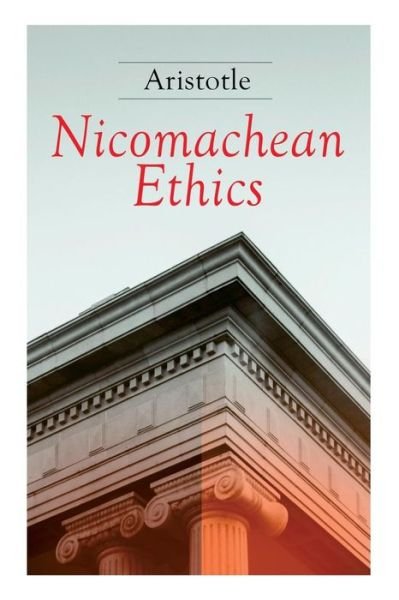
Nicomachean Ethics Aristotle


Finnes også som:
- Pocketbok (2016) NOK 129
- Pocketbok (2018) NOK 149
- Pocketbok (2013) NOK 149
- Pocketbok (2017) NOK 159
- Pocketbok (2005) NOK 159
- Pocketbok (2020) NOK 169
- Pocketbok (2016) NOK 179
- Pocketbok (2021) NOK 179
- Pocketbok (2019) NOK 189
- Pocketbok (2008) NOK 219
- Pocketbok (2025) NOK 219
- Pocketbok (2017) NOK 239
- Bok (2022) NOK 239
-
PocketbokThird Edition, third edition(2019) NOK 239
- Innbunden bok (2017) NOK 249
- Bok (2022) NOK 309
- Innbunden bok (2017) NOK 329
- Bok (2022) NOK 349
-
Innbunden bokHackett Signature edition(2026) NOK 459
-
Innbunden bokThird Edition, third edition(2019) NOK 589
Nicomachean Ethics
Aristotle
The Ethics of Aristotle is one half of a single treatise of which his Politics is the other half. Both deal with one and the same subject. This subject is what Aristotle calls in one place the "philosophy of human affairs;" but more frequently Political or Social Science. In the two works taken together we have their author's whole theory of human conduct or practical activity, that is, of all human activity which is not directed merely to knowledge or truth. The Nicomachean Ethics is the name normally given to Aristotle's best-known work on ethics. The work, which plays a pre-eminent role in defining Aristotelian ethics, consists of ten books, originally separate scrolls, and is understood to be based on notes from his lectures at the Lyceum. The title is often assumed to refer to his son Nicomachus, to whom the work was dedicated or who may have edited it (although his young age makes this less likely). Alternatively, the work may have been dedicated to his father, who was also called Nicomachus. The theme of the work is a Socratic question previously explored in the works of Plato, Aristotle's friend and teacher, of how men should best live. In his Metaphysics, Aristotle described how Socrates, the friend and teacher of Plato, had turned philosophy to human questions, whereas Pre-Socratic philosophy had only been theoretical. Ethics, as now separated out for discussion by Aristotle, is practical rather than theoretical, in the original Aristotelian senses of these terms. In other words, it is not only a contemplation about good living, because it also aims to create good living. It is therefore connected to Aristotle's other practical work, the Politics, which similarly aims at people becoming good. Ethics is about how individuals should best live, while the study of politics is from the perspective of a law-giver, looking at the good of a whole community.
| Media | Bøker Pocketbok (Bok med mykt omslag og limt rygg) |
| Utgitt | 27. oktober 2016 |
| ISBN13 | 9781539784388 |
| Utgivere | Createspace Independent Publishing Platf |
| Antall sider | 154 |
| Mål | 152 × 229 × 8 mm · 213 g |
| Språk | Engelsk |
Mer med Aristotle
Vis alle


![Cover for Aristotle · The Physics. Writings on Natural Philosophy (Concise Edition) - Foundations (Pocketbok) [Concise edition] (2023)](https://imusic.b-cdn.net/images/item/original/668/9781804175668.jpg?aristotle-2023-the-physics-writings-on-natural-philosophy-concise-edition-foundations-pocketbok&class=scaled&v=1673953646)



Flere i samme serie
![Cover for Aristotle · Nicomachean Ethics - Focus Philosophical Library (Pocketbok) [New edition] (2002)](https://imusic.b-cdn.net/images/item/original/354/9781585100354.jpg?aristotle-2002-nicomachean-ethics-focus-philosophical-library-pocketbok&class=scaled&v=1410065057)

Se alt med Aristotle ( f.eks. Pocketbok , Innbunden bok , Bok , CD og Landkart )