
Fortell venner om denne varen:
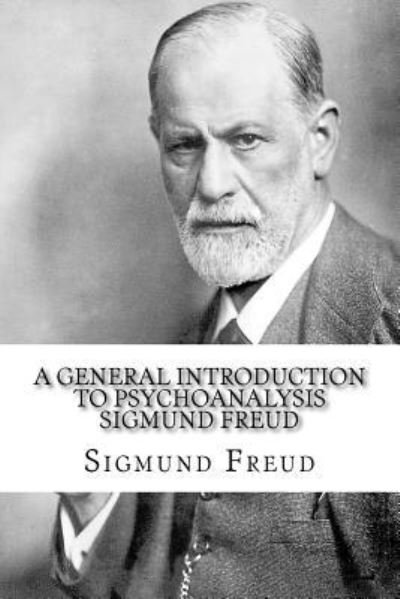
A General Introduction to Psychoanalysis Sigmund Freud


Finnes også som:
- Pocketbok (2015) NOK 139
- Pocketbok (2014) NOK 159
- Pocketbok (2016) NOK 179
- Pocketbok (2018) NOK 179
- Pocketbok (2016) NOK 189
- Pocketbok (2014) NOK 209
- Pocketbok (2022) NOK 229
- Pocketbok (2018) NOK 249
- Pocketbok (2018) NOK 249
- Innbunden bok (2019) NOK 269
- Pocketbok (2021) NOK 279
- Innbunden bok (2018) NOK 389
- Pocketbok (2014) NOK 399
- Pocketbok (2020) NOK 589
- Innbunden bok (2020) NOK 759
A General Introduction to Psychoanalysis
Sigmund Freud
Though it has now fallen out of favor among many practitioners and scholars, Freud's concept of psychoanalysis -- an approach that focuses primarily on adverse events in early childhood and irrational drives that are overcome via extended talk therapy -- was and continues to be enormously influential, not only in the realm of psychology, but also in the larger culture. This volume offers a comprehensive overview of psychoanalysis from the point of view of the field's creator. Sigmund Freud (6 May 1856 - 23 September 1939) was an Austrian neurologist and the founder of psychoanalysis, a clinical method for treating psychopathology through dialogue between a patient and a psychoanalyst. Freud was born to Galician Jewish parents in the Moravian town of Freiberg, in the Austrian Empire. He qualified as a doctor of medicine in 1881 at the University of Vienna. Upon completing his habilitation in 1885, he was appointed a docent in neuropathology and became an affiliated professor in 1902. Freud lived and worked in Vienna, having set up his clinical practice there in 1886. In 1938 Freud left Austria to escape the Nazis. He died in exile in the United Kingdom in 1939. In creating psychoanalysis, Freud developed therapeutic techniques such as the use of free association and discovered transference, establishing its central role in the analytic process. Freud's redefinition of sexuality to include its infantile forms led him to formulate the Oedipus complex as the central tenet of psychoanalytical theory. His analysis of dreams as wish-fulfillments provided him with models for the clinical analysis of symptom formation and the underlying mechanisms of repression. On this basis Freud elaborated his theory of the unconscious and went on to develop a model of psychic structure comprising id, ego and super-ego.
| Media | Bøker Pocketbok (Bok med mykt omslag og limt rygg) |
| Utgitt | 27. juli 2017 |
| ISBN13 | 9781973992820 |
| Utgivere | Createspace Independent Publishing Platf |
| Antall sider | 96 |
| Mål | 216 × 279 × 5 mm · 244 g |
| Språk | Engelsk |
Mer med Sigmund Freud
Vis alle


![Cover for Sigmund Freud · The Interpretation of Dreams (Concise Edition) - Foundations (Pocketbok) [Concise edition] (2024)](https://imusic.b-cdn.net/images/item/original/921/9781804177921.jpg?sigmund-freud-2024-the-interpretation-of-dreams-concise-edition-foundations-pocketbok&class=scaled&v=1695069508)



















Flere i samme serie
![Cover for Sigmund Freud · A General Introduction to Psychoanalysis - Classics of World Literature (Pocketbok) [UK edition] (2012)](https://imusic.b-cdn.net/images/item/original/867/9781840226867.jpg?sigmund-freud-2012-a-general-introduction-to-psychoanalysis-classics-of-world-literature-pocketbok&class=scaled&v=1397496763)

Se alt med Sigmund Freud ( f.eks. Pocketbok , Bok , Innbunden bok , Heftet bok og CD )